

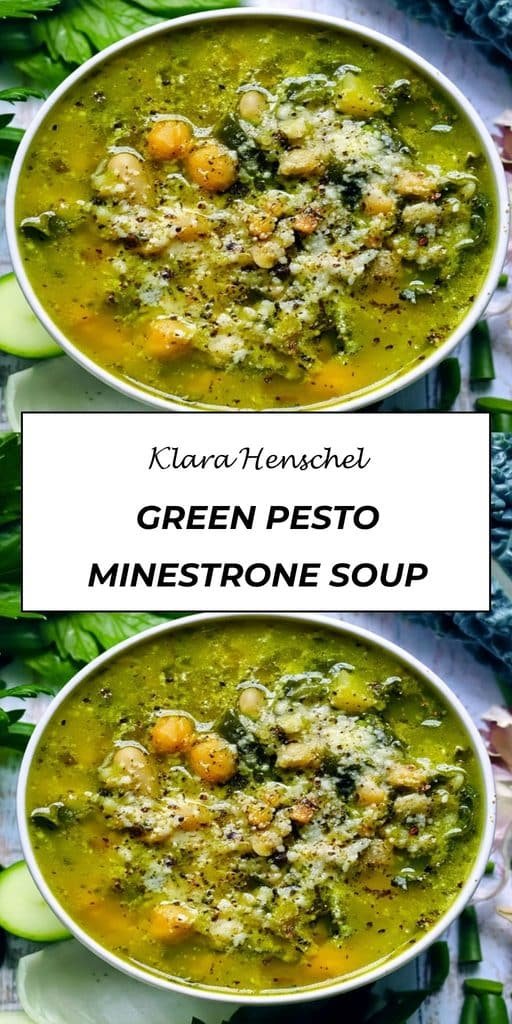
If you’re craving a comforting soup that’s full of fresh vegetables, hearty beans, and bright herb flavor, this Green Pesto Minestrone Soup is just what you need. Unlike traditional minestrone, this delicious version contains no tomatoes. Instead, pesto is stirred in at the end of cooking, giving the soup its vibrant green color and wonderfully fresh, savory flavor.
Made with zucchini, kale, green beans, chickpeas, cannellini beans, and small pasta, this Italian-inspired soup is both nourishing and satisfying. The combination of vegetables and beans creates a hearty texture, while the pesto adds a fragrant blend of herbs, garlic, and olive oil that brings everything together.
Best of all, this easy green minestrone soup is ready in just 30 minutes. It’s perfect for busy weeknight dinners, meal prep, or a cozy lunch served with crusty bread and a sprinkle of Parmesan cheese.
Why You’ll Love This Recipe
- Fresh and flavorful: Pesto adds a bright, herby finish that makes every spoonful delicious.
- Packed with vegetables: Zucchini, kale, celery, green beans, and onions bring color, texture, and freshness.
- Hearty and filling: Chickpeas, cannellini beans, and pasta make this soup satisfying enough for a complete meal.
- Ready in 30 minutes: Simple ingredients and a straightforward cooking method make it ideal for busy days.
- Easy to customize: Swap the pasta, use vegetable broth, or choose vegan pesto to suit your dietary preferences.
Ingredients You’ll Need
- Extra-virgin olive oil: Provides a flavorful base for sautéing the vegetables and adds richness to the soup.
- Yellow onion: Diced onion brings sweetness and savory depth to the broth.
- Celery: Adds a fresh, aromatic flavor that complements the other vegetables.
- Garlic: Minced garlic enhances the soup with a fragrant, savory note.
- Zucchini: Two cups of diced zucchini add a tender texture and mild flavor.
- Kale: Shredded kale provides a hearty leafy green element. Tuscan kale, also known as Lacinato kale, works especially well.
- Green beans: Cut into small pieces, green beans add freshness and a pleasant bite. Fresh or frozen green beans can be used.
- Chickpeas: Canned chickpeas provide plant-based protein, fiber, and a satisfying texture.
- Cannellini beans: These creamy white beans make the broth heartier and complement the chickpeas.
- Chicken broth: Creates the savory soup base. Vegetable broth is an excellent alternative for a vegetarian version.
- Small pasta: Fregola, acini di pepe, or ditalini work well because they fit easily onto a spoon and cook quickly.
- Pesto: A quarter cup of store-bought or homemade pesto delivers the signature green color and fresh basil flavor.
- Kosher salt and black pepper: Enhance the flavor of the vegetables, beans, and broth.
- Parmesan or Romano cheese: Adds a salty, savory finish when sprinkled over each bowl.
- Extra olive oil: A light drizzle just before serving adds richness and aroma.
- Lemon wedges (optional): A squeeze of fresh lemon brightens the broth and balances the savory flavors.
How to Make Green Pesto Minestrone Soup
Step 1: Sauté the Onion and Celery
Heat the olive oil in a large soup pot or Dutch oven over medium-high heat.
Add the diced onion and celery, stirring occasionally, and cook for about 3 minutes until the vegetables soften and begin to brown slightly.
This quick sauté helps develop the flavor of the soup and creates a delicious foundation for the remaining ingredients.
Step 2: Add the Garlic
Stir in the minced garlic and cook for about 1 minute, until fragrant.
Keep the garlic moving in the pot so it doesn’t burn. Burnt garlic can give the broth a bitter flavor, so reduce the heat slightly if needed.
Step 3: Add the Vegetables and Beans
Add the diced zucchini, shredded kale, and chopped green beans to the pot. Stir in the drained and rinsed chickpeas and cannellini beans.
Pour in the chicken broth or vegetable broth and stir everything together.
Bring the mixture to a boil, allowing the vegetables and beans to begin releasing their flavors into the broth.
Step 4: Cook the Pasta
Once the soup reaches a boil, stir in the small pasta.
Reduce the heat to low, cover the pot, and simmer for about 10 minutes, or until the pasta is tender. Check the package instructions if your chosen pasta requires a different cooking time.
Stir occasionally to keep the pasta from sticking to the bottom of the pot. If the soup becomes too thick, add a little extra broth or water.
Step 5: Stir in the Pesto
Turn off the heat before adding the pesto.
Stir in the pesto until it is evenly distributed throughout the soup. The broth will take on a vibrant green hue, and the fresh herbs will add a bright, aromatic flavor.
Taste the soup and season with kosher salt and freshly ground black pepper. The amount of salt needed will depend on the broth and pesto you use, so add it gradually.
Tip: Adding pesto at the end helps preserve its fresh flavor and vibrant color.
Step 6: Adjust the Texture (Optional)
If you prefer a thicker, more substantial soup, use an immersion blender to pulse the soup a few times.
This partially blends some of the beans and vegetables into the broth while leaving plenty of whole ingredients for texture. Avoid blending too much if you want to keep the pasta and vegetables intact.
Step 7: Garnish and Serve
Ladle the hot soup into bowls and finish with a drizzle of olive oil, freshly ground black pepper, and grated Parmesan or Romano cheese.
Add a squeeze of lemon juice if the soup needs a little extra brightness, especially if your pesto doesn’t already contain lemon.
Serve immediately while the vegetables are tender and the pesto flavor is fresh.
Tips for Success
- Add the pesto after cooking: Stirring it in once the heat is off helps maintain its fresh, aromatic flavor.
- Rinse the canned beans: Draining and rinsing the chickpeas and cannellini beans removes excess canning liquid and helps keep the broth tasting clean.
- Choose small pasta shapes: Fregola, acini di pepe, and ditalini work especially well in minestrone because they’re easy to eat with a spoon.
- Don’t overcook the vegetables: Simmer just until the pasta is tender and the vegetables reach your preferred texture.
- Season gradually: Broth, pesto, and cheese can all contain salt, so taste before adding too much.
- Use fresh lemon if needed: A squeeze of lemon can brighten the flavors and balance the richness of the pesto.
- Add extra broth when reheating: Pasta absorbs liquid as the soup rests, so leftovers may need a splash of broth or water.
- Choose your pesto carefully: Traditional pesto often contains Parmesan or Romano cheese. For a vegan version, use pesto made without dairy.
Equipment Needed
- Large soup pot or Dutch oven: Provides enough room for the broth, vegetables, beans, and pasta.
- Cutting board and sharp knife: For preparing the onion, celery, zucchini, green beans, and kale.
- Measuring cups and spoons: Help keep the ingredient proportions consistent.
- Wooden spoon or spatula: For stirring the vegetables, broth, and pesto.
- Colander: Useful for draining and rinsing canned beans.
- Immersion blender (optional): Helps thicken the soup by partially blending some of the beans and vegetables.
- Ladle: Makes serving the soup easy.
Recipe Variations
1. Vegetarian Green Minestrone Soup
Replace the chicken broth with vegetable broth. Check that your pesto contains vegetarian-friendly ingredients, since some traditional versions use cheese made with animal rennet. Finish with vegetarian Parmesan or extra olive oil.
2. Vegan Green Pesto Minestrone
Use vegetable broth and dairy-free pesto. Skip the Parmesan or Romano cheese, or replace it with a vegan alternative. The chickpeas, cannellini beans, vegetables, and pasta still make this a hearty, satisfying meal.
3. Gluten-Free Green Minestrone Soup
Replace the pasta with quinoa, rice, or another gluten-free grain. Cook the grain according to its instructions and adjust the liquid as needed. Check the broth and pesto labels to ensure all ingredients are gluten-free.
4. Green Minestrone With Extra Vegetables
Add chopped broccoli, peas, spinach, or leeks to increase the variety of vegetables. Add delicate vegetables such as spinach near the end of cooking so they don’t become overly soft.
5. Green Minestrone With Chicken
For extra protein, add cooked shredded chicken when you pour in the broth. Let it simmer with the vegetables before adding the pasta. This variation is especially good if you have leftover roast chicken.
6. Creamier Green Pesto Minestrone
For a creamier texture, partially blend some of the beans and vegetables using an immersion blender. You can also stir in a small splash of cream or an unsweetened plant-based alternative, although the traditional recipe doesn’t require it.
7. Green Minestrone With Parmesan Rind
If you have a Parmesan rind available, add it to the soup while the broth simmers. It adds a deep, savory flavor. Remove the rind before serving, then finish each bowl with freshly grated cheese.
What to Serve With Green Pesto Minestrone Soup
This hearty green minestrone soup can easily be served as a complete meal, but a few simple sides make it even more satisfying.
- Crusty sourdough bread: Perfect for dipping into the savory, pesto-infused broth.
- Garlic bread: Adds a crisp, buttery side that complements the herbs and vegetables.
- Caprese salad: Fresh tomatoes, mozzarella, and basil offer a refreshing contrast to the warm soup.
- Grilled cheese sandwich: A comforting option for lunch, especially on a chilly day.
- Roasted vegetables: Roasted broccoli or asparagus adds extra texture and flavor.
- Simple green salad: A light salad with lemon vinaigrette balances the hearty beans and pasta.
- Bruschetta: Toasted bread topped with herbs or chopped vegetables makes a delicious Italian-inspired accompaniment.
For an easy weeknight dinner, serve a generous bowl of green pesto minestrone with warm crusty bread and a sprinkle of Parmesan.
Frequently Asked Questions
What makes green minestrone different from traditional minestrone?
Traditional minestrone often includes tomatoes, which give the broth a red color and tangy flavor. This green version skips the tomatoes and uses pesto stirred in at the end of cooking. The result is a vibrant green soup with a fresh, herby flavor and plenty of vegetables and beans.
Can I use a different type of pasta?
Yes. Small shapes such as ditalini, orzo, small shells, and acini di pepe work well. Fregola is another excellent option because of its chewy texture. Adjust the cooking time according to the pasta package instructions.
Can I make green pesto minestrone ahead of time?
Yes, but for the best texture, consider cooking the pasta separately and adding it when serving. Pasta absorbs broth as it sits, and the soup may become thicker overnight. You can also prepare the soup base ahead and add the pasta and pesto when reheating.
How should I store leftovers?
Allow the soup to cool, then transfer it to an airtight container and refrigerate for up to 3–4 days. The pasta will continue absorbing liquid, so add extra broth or water when reheating. Warm the soup gently on the stovetop, stirring occasionally.
Can I freeze green pesto minestrone soup?
Yes, although the pasta may soften after thawing. For the best results, freeze the soup base without the pasta and pesto, then add freshly cooked pasta and pesto after reheating. Store in freezer-safe containers for about 2–3 months for best quality.
Can I use frozen green beans?
Absolutely. Frozen green beans are convenient and work well in this recipe. Add them directly to the pot with the other vegetables. Depending on their size, they may soften slightly faster than fresh green beans.
Why should I add the pesto at the end?
Pesto contains fresh herbs, garlic, oil, and sometimes cheese. Prolonged cooking can dull its fresh flavor and vibrant green color. Stirring it in after turning off the heat helps preserve its aroma and gives the soup its signature finish.
Final Thoughts
Green Pesto Minestrone Soup is a fresh, colorful twist on a classic Italian-inspired favorite. With tender green vegetables, protein-rich chickpeas and cannellini beans, and small pasta shapes in a savory broth, it’s hearty enough for dinner while still feeling light and full of fresh flavor.
The pesto stirred in at the end is what makes this recipe special, adding a vibrant green color and aromatic finish without needing tomatoes or complicated ingredients. You can easily adapt it with different vegetables, gluten-free grains, or vegan pesto to suit your needs.
Serve it with crusty bread, a drizzle of olive oil, and freshly grated Parmesan for a comforting meal that’s ready in just 30 minutes.
Give this Green Pesto Minestrone Soup a try, and let us know in the comments which vegetables or pasta shapes you used!
Print
Green Pesto Minestrone Soup
- Total Time: 30 minutes
- Yield: 6 servings
Description
Green Pesto Minestrone Soup is a vibrant, flavorful Italian-inspired soup made with zucchini, kale, green beans, chickpeas, cannellini beans, and small pasta. Pesto stirred in at the end gives this tomato-free minestrone a fresh green color and bright flavor. Serve with a drizzle of olive oil, grated Parmesan or Romano cheese, black pepper, and optional lemon juice.
Ingredients
- 2 tablespoons extra-virgin olive oil
- 1 onion, diced (about 1 1/2 cups)
- 2 stalks celery, diced (about 1 cup)
- 2 cloves garlic, minced
- 2 cups diced zucchini
- 2 cups shredded kale
- 2 cups green beans, cut into 1/2-inch pieces (frozen is fine)
- 15 oz canned chickpeas, drained and rinsed
- 15 oz canned cannellini beans, drained and rinsed
- 8 cups chicken stock or vegetable broth
- 1 cup small pasta, such as fregola or acini di pepe
- 1/4 cup pesto, store-bought or homemade
- Kosher salt and black pepper, to taste
- Extra olive oil, for serving
- Parmesan or Romano cheese, for serving
- Freshly ground black pepper, for serving
- Lemon wedges, optional, for serving
Instructions
- Heat the 2 tablespoons of extra-virgin olive oil in a large pot or Dutch oven over medium-high heat. Add the diced onion and celery and sauté until softened and beginning to brown, about 3 minutes.
- Add the minced garlic and stir until fragrant, about 1 minute.
- Add the diced zucchini, shredded kale, green beans, drained chickpeas, drained cannellini beans, and chicken stock or vegetable broth. Stir to combine.
- Bring the soup to a boil, then stir in the small pasta. Cover and simmer over low heat for about 10 minutes, or until the pasta is cooked.
- Turn off the heat and stir in the pesto. Season with kosher salt and black pepper to taste, adjusting according to the saltiness of the broth.
- Optional: Use an immersion blender to pulse the soup a few times, partially pureeing some of the ingredients to give the soup more body and thickness.
- Ladle into bowls and finish with a drizzle of olive oil, Parmesan or Romano cheese, and freshly ground black pepper. Add a squeeze of lemon juice if desired.
Notes
- Vegetarian version: Use vegetable broth instead of chicken stock.
- Vegan version: Use vegetable broth and vegan pesto, and omit the Parmesan or Romano cheese or use a plant-based alternative.
- Pasta options: Fregola is a toasted, small, round pasta similar to acini di pepe or pearl couscous. Other small pasta shapes, such as ditalini, also work well.
- Gluten-free version: Replace the pasta with quinoa, rice, or another gluten-free grain.
- Extra flavor: Add a Parmesan rind while the soup simmers, then remove and discard it before serving.
- Seasoning: Taste before adding salt, since the broth and pesto may already be salty.
- Serving suggestion: Add lemon juice if the soup needs a brighter flavor, especially if the pesto does not contain lemon.
- Prep Time: 10 minutes
- Cook Time: 20 minutes
- Category: Soup
- Method: Stovetop
- Cuisine: Italian